










Walking into a swim shop and staring at racks of swimming caps can feel overwhelming. Silicone, latex, neoprene, lycra — and that’s just the materials. Then there are sizes, shapes, and designs to consider. Whether you're a competitive swimmer chasing personal bests, a fitness enthusiast logging daily laps, a parent prepping for swim lessons, or someone with long, curly, or textured hair looking for the perfect fit — this guide has you covered.
The truth is, 70% of swimmers buy the wrong cap their first time. But not you. By the end of this guide, you'll know exactly which cap fits your needs, your hair type, and your budget. Let's dive in.
Why Do You Really Need a Swim Cap?
Swim caps serve several important functions, but let's clear up a common misconception right away: swim caps are not designed to keep your hair completely dry. Even with a tight fit, some water will always sneak in — especially around the edges.
So what do they do?
-
Protect your hair from damage — Caps act as a barrier against chlorinated or salt water, preventing your hair from becoming saturated and damaged.
-
Keep hair out of your face — No more pushing strands out of your eyes mid-lap.
-
Reduce drag — A streamlined cap helps you glide through the water with less resistance.
-
Provide warmth — In open water, caps help retain body heat.
-
Improve visibility — Brightly colored caps make you easier to spot in open water.
-
Maintain pool hygiene — Keeps stray hairs from floating in the pool (and nobody wants to swim into someone else's hair).
The Golden Rule – Fit Over Fashion
Before we get into materials and specific recommendations, here's the most important rule: your cap should feel snug but not painfully tight.
-
Too tight: Causes headaches, hair pulling, and discomfort
-
Too loose: Slippage during your swim — the cap won't stay put
-
Just right: Covers the head and ears completely without being uncomfortably tight
How to measure your head: Wrap a tape measure horizontally around your head just above your eyebrows. This measurement will help you choose the right size.
| Head Circumference | Recommended Size |
|---|---|
| Under 52 cm | XS / Baby / Junior |
| 52–54 cm | Small / Kids |
| 54–58 cm | Medium / Standard Adult |
| 58+ cm | Large / Extra Big |
Fabric and coated mesh caps typically come in specific sizes (S, M, L), while silicone and latex caps are usually "one size fits most" because they're highly stretchy.
Material Comparison – Which One Is Right for You?
The material is the single most important decision when choosing a swim cap. Here's how the main options compare:
| Material | Durability | Waterproof | Hair-Pull | Warmth | Best For |
|---|---|---|---|---|---|
| Silicone | ⭐⭐⭐⭐ (6–12 months) | Excellent | Low | Moderate | Most swimmers, durability, hair protection |
| Latex | ⭐⭐ (1–3 months) | Good | High | Low | Budget, occasional swimmers, warm pools |
| Lycra/Fabric | ⭐⭐⭐⭐ | Poor | Very Low | None | Sensitive scalps, aqua aerobics, kids |
| Neoprene | ⭐⭐⭐⭐⭐ | Very Good | Low | High | Open water, cold water, winter swimming |
| Hybrid | ⭐⭐⭐ | Good | Very Low | Moderate | Comfort + water protection |
Silicone — The All-Around Best Choice
Silicone caps are thicker, smoother, and more durable than latex, lasting 6 to 12 months with proper care. They're hypoallergenic, glide on easily without pulling hair, and provide excellent waterproofing. Silicone is gentler on hair than latex and creates a sleek profile that reduces drag.
Best for: Most swimmers, frequent users, anyone who cares about their hair.
Latex — The Budget-Friendly Option
Latex caps are thinner, lighter, and more breathable than silicone. They provide an exceptionally tight grip that stays put during dives and flip turns. At just a fraction of the cost of silicone, they're the standard choice for team bulk orders.
The downsides: Latex degrades quickly — 1 to 3 months — and can turn into a sticky mess if left damp. It's also more prone to tearing and can pull on fine hair. About 4.3% of the population has a latex allergy, so this isn't suitable for everyone.
Best for: Budget-conscious swimmers, occasional use, warm pools.
Lycra/Fabric — Maximum Comfort
Lycra and fabric caps are the softest, most comfortable option. They slip on easily, don't pull hair, and are highly breathable. They're also strong enough to last 6+ months.
The tradeoff: Fabric is porous — water flows right through. These caps offer minimal hair protection and no drag reduction.
Best for: Sensitive scalps, aqua aerobics, children who dislike tight caps.
Neoprene — For Cold Open Water
Neoprene caps are the only material that retains meaningful body heat in cold water. Made from the same material as wetsuits, they provide thermal insulation that other caps simply can't match.
Best for: Open water swimmers, triathletes, cold water conditions.
How to Choose a Swim Cap for Kids & Juniors
Kids aren't just miniature adults — they have different needs when it comes to swim caps. Here's what parents should know.
Why Kids Need a Different Cap
Children have smaller head circumferences and more sensitive scalps than adults. A standard adult cap will be too loose (slipping off during swims) or too tight (causing discomfort and headaches). Junior caps are specifically designed for smaller heads and provide a secure, comfortable fit.
Material Matters for Little Swimmers
Silicone is the best choice for kids — it's hypoallergenic, gentle on sensitive scalps, and durable enough to survive the chaos of a child's swim bag. Unlike latex, silicone won't pull on fine hair or cause allergic reactions.
For children with sensory issues or particularly sensitive scalps, fabric/lycra caps are a great alternative. They sit gently against the scalp without pulling or snagging, though they do let water through.
Durability Matters
Kids throw caps in bags, leave them in the sun, and forget to rinse them. Thicker silicone caps survive this abuse much better than thin latex ones.
Fun Designs = Motivation
Bright colors, animal prints (sharks, bears, fish, unicorns), and fun patterns make wearing a cap exciting rather than a chore. A cap featuring their favorite animal can turn "I don't want to wear this" into "I can't wait to wear this!"
Quick Tip for Parents
Wet your child's hair before putting on the cap — damp hair creates less friction and makes application easier. Start from the forehead and work the cap back over the head, avoiding pulling from the back.
👉 Browse the full collection of Kids Swimming Caps
👉 Shop Kids Swimming Caps Under ₹300
How to Choose a Swim Cap for Women & Girls
Women and girls face unique challenges when choosing swim caps — especially when it comes to hair length, volume, and texture.
The "Long Hair" vs. "Standard" Dilemma
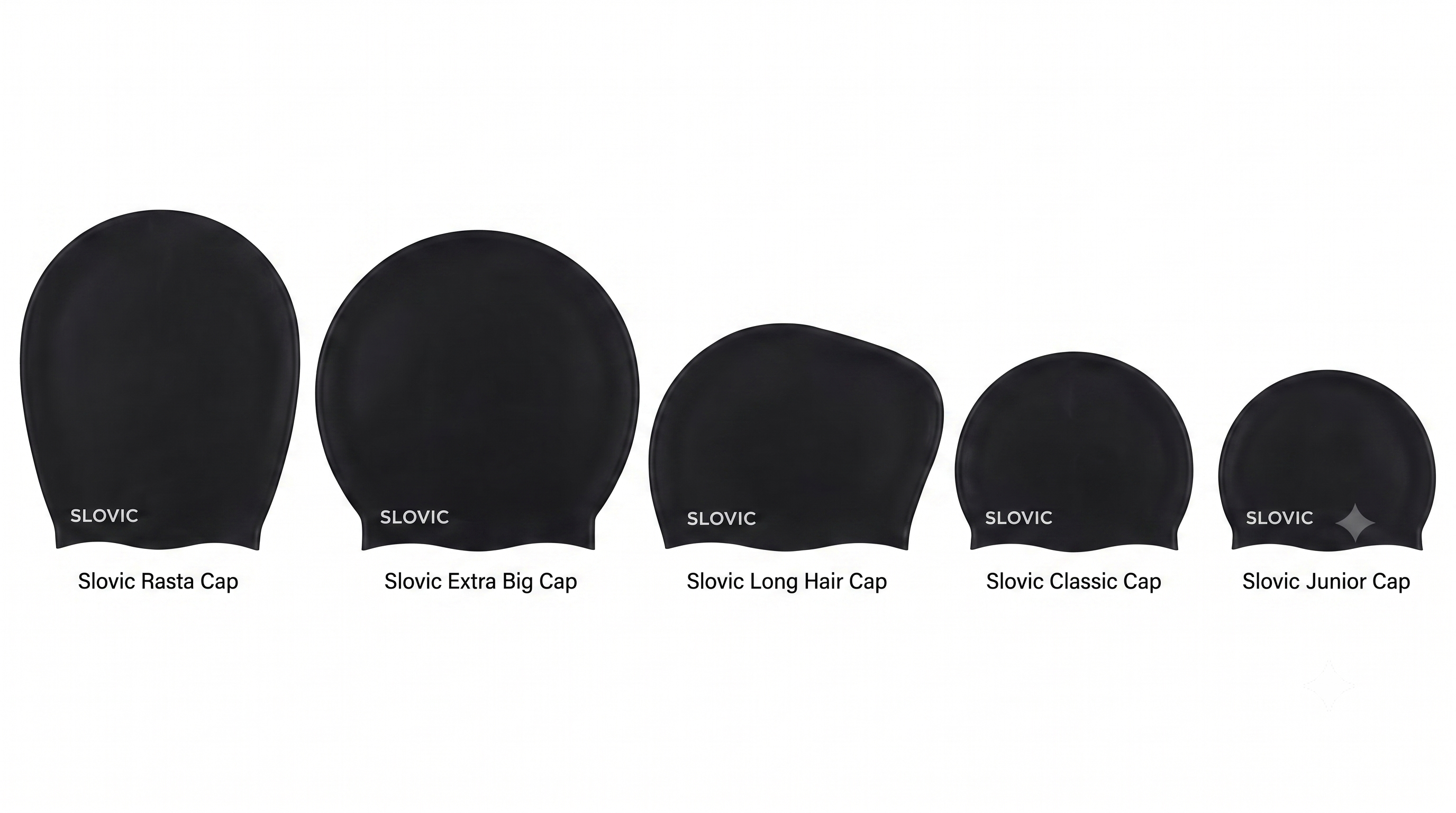
If you have long hair (shoulder-length or longer), a standard cap won't cut it. Long Hair Caps provide 30 to 50 percent more internal space in the back to accommodate buns, ponytails, and braids. This prevents the cap from riding up or popping off during dives and flip turns.
Look for caps explicitly labeled "long hair," "extra large," or "for long hair". These typically offer at least 11 inches of length to accommodate a ponytail or bun.
Protecting Color-Treated Hair
If you've invested in color-treated hair, silicone is your best friend. Silicone creates a better seal than latex or fabric, reducing chlorine exposure that can strip hair dye. The thicker material also provides a gentler fit that won't pull or break fragile, chemically treated strands.
For Girls with Curly, Thick, or Textured Hair
Standard swim caps are not designed for volume. If you have thick, curly, textured hair, braids, locs, or weaves, you need a cap that respects your hair's natural volume. Look for caps specifically designed for curly or voluminous hair — these combine spacious interior volume with hair-friendly silicone that won't pull strands.
Caps with side or back seams (rather than front-center) reduce pressure on your hairline and temples — critical if you wear your hair in a high bun or afro.
Fabric/Lycra for Sensitive Scalps
If you or your daughter have a sensitive scalp, fabric/lycra caps are the most comfortable option. They don't pull on hair and sit gently against the scalp. The tradeoff is that they let water through, but for casual swimming or aqua aerobics, that's often acceptable.
Putting It On — The Gentle Way
Wet your hair first, then secure it in a low, tight bun or ponytail. Flip the cap inside out so the smooth side faces outward, reducing friction against your hair. Place the front edge on your forehead and work it back slowly — never pull from the back.
👉 Explore Swimming Caps for Women
👉 Shop Swimming Caps for Women Under ₹500
How to Choose a Swim Cap for Men
Men have their own considerations when choosing swim caps — from short buzz cuts to longer styles and performance needs.
Men with Short or Buzzed Hair
If you keep your hair short, you have the most flexibility. Standard silicone or latex caps work perfectly. Latex is a budget-friendly option for daily lap swimmers who go through caps frequently, while silicone offers better durability and a more comfortable fit.
Men with Longer Hair or Man-Buns
Don't assume all men have short hair. If you have longer hair or wear a man-bun, you need the same consideration as women with long hair. Long Hair Caps or Extra Big Caps provide the extra space needed to accommodate your style without excessive squeezing.
For Competitive Male Swimmers
If you're racing, look for molded/dome silicone caps. These are shaped with a smooth, rounded form and no seams, providing an ultra-streamlined fit that reduces drag more effectively than standard caps. Many elite swimmers layer a silicone cap over a latex cap for competitions — the latex provides a tight grip while the silicone creates a smooth outer surface.
Triathletes & Open-Water Men
If you swim in open water, prioritize warmth and visibility. Neoprene caps provide thermal insulation for cold water conditions. Bright neon colors (yellow, orange, pink) make you visible to boats and other swimmers — many open water venues actually require brightly colored caps for safety.
Material Choice for Men
-
Short hair, budget-conscious: Latex (cheap, replace frequently)
-
Short hair, regular swimmer: Silicone (durable, comfortable)
-
Long hair / man-bun: Long Hair Silicone
-
Competitive racing: Molded silicone dome cap
-
Open water / triathlon: Neoprene + bright color
👉 Browse Swimming Caps for Men
👉 Shop Swimming Caps for Men Under ₹500
Quick Decision Guide
| If you... | Choose this |
|---|---|
| Swim regularly and care about your hair | Silicone |
| Are on a budget or swim occasionally | Latex |
| Have long, thick, or curly hair | Long Hair Silicone |
| Swim in cold open water | Neoprene |
| Do aqua aerobics or have a sensitive scalp | Lycra/Fabric |
| Race competitively | Molded Silicone Dome Cap |
| Have a latex allergy | Silicone (hypoallergenic) |
| Are buying for a child | Junior Silicone |
Pro Tips: How to Put On a Swim Cap Without Pulling Your Hair
Putting on a cap incorrectly can lead to snagged hair, rips, and frustration. Follow these steps:
-
Wet your hair first — damp hair creates less friction
-
Secure long hair in a low, tight ponytail or bun
-
Flip the cap inside out so the smooth side faces outward — this reduces friction against your hair
-
Place both hands inside the cap and stretch it wide
-
Start from the forehead — place the front edge on your forehead and work it back over your head
-
Take it slow — avoid pulling from the back, as this leads to hair getting caught
-
Tuck and smooth — make sure all hair is under and there are no air bubbles
-
Position — the cap should sit about a finger's width above your eyebrows
Never use bobby pins or hair clips under your cap — they can easily puncture the material.
How to Make Your Swim Cap Last 3x Longer
With proper care, a silicone cap can last 6–12 months. Here's how:
-
Rinse immediately after every swim with cool, clean water to remove chlorine, salt, and sweat
-
Air dry completely before storing — away from direct sunlight and heat sources
-
Store flat or loosely rolled — never fold or crease
-
Sprinkle baby powder or talcum powder inside to absorb moisture and prevent sticking
-
Gentle wash weekly with mild soap (baby shampoo works well) — no scrubbing
-
Replace when it no longer stays snug — a stretched-out cap won't protect your hair or stay in place
5 Common Myths About Swimming Caps (Debunked)
Myth 1: "Swim caps keep your hair completely dry"
False. Even with a tight fit, some water always gets under the cap. The purpose is to prevent saturation from chlorinated water, not to keep hair bone-dry.
Myth 2: "One size fits all"
False. While silicone and latex caps are stretchy, they don't fit everyone equally. Fabric caps come in specific sizes, and head circumference matters. A cap that's too tight causes headaches; one that's too loose slips off.
Myth 3: "Latex is just as good as silicone"
False. Latex is thinner, less durable (1–3 months vs. 6–12 months), and more likely to tear. Latex also pulls on hair and can cause allergic reactions in about 4.3% of the population.
Myth 4: "You don't need a cap in saltwater"
False. Salt water can be just as damaging to hair as chlorine. Rinse your cap with fresh water after saltwater use to prevent salt crystals from degrading the material.
Myth 5: "All caps are the same — it's just rubber"
False. The differences in material, fit, and design have a huge impact on comfort, drag reduction, hair protection, and durability. The right cap for a competitive swimmer is very different from the right cap for a child with a sensitive scalp.
Complete Your Swim Kit
A swimming cap is just one piece of the puzzle. To get the most out of your swim sessions, consider these essential accessories:
👉 Browse Swimming Goggles for Men
👉 Shop Kids Swimming Goggles
👉 Shop Kids Swimming Goggles Under ₹500
👉 Shop Kids Swimming Goggles Under ₹800
👉 Explore Swimming Accessories
Final Thoughts
The "right" swim cap ultimately comes down to your personal needs — your swimming frequency, hair type, budget, and goals. Don't be afraid to try different materials and brands until you find your favorite. A good cap should feel comfortable, stay in place, and protect your hair session after session.
Ready to find your perfect match? Start with silicone — it's the best all-around choice for most swimmers. If you have specific needs like long hair, curly hair, or cold water swimming, branch out from there.
👉 Start your search at Slovic Swimming Caps
Have questions about choosing a swim cap? Drop them in the comments below — we're here to help! 🏊♂️
This guide was last updated in 2026 to reflect the latest materials, trends, and expert recommendations for swimmers of all levels.