





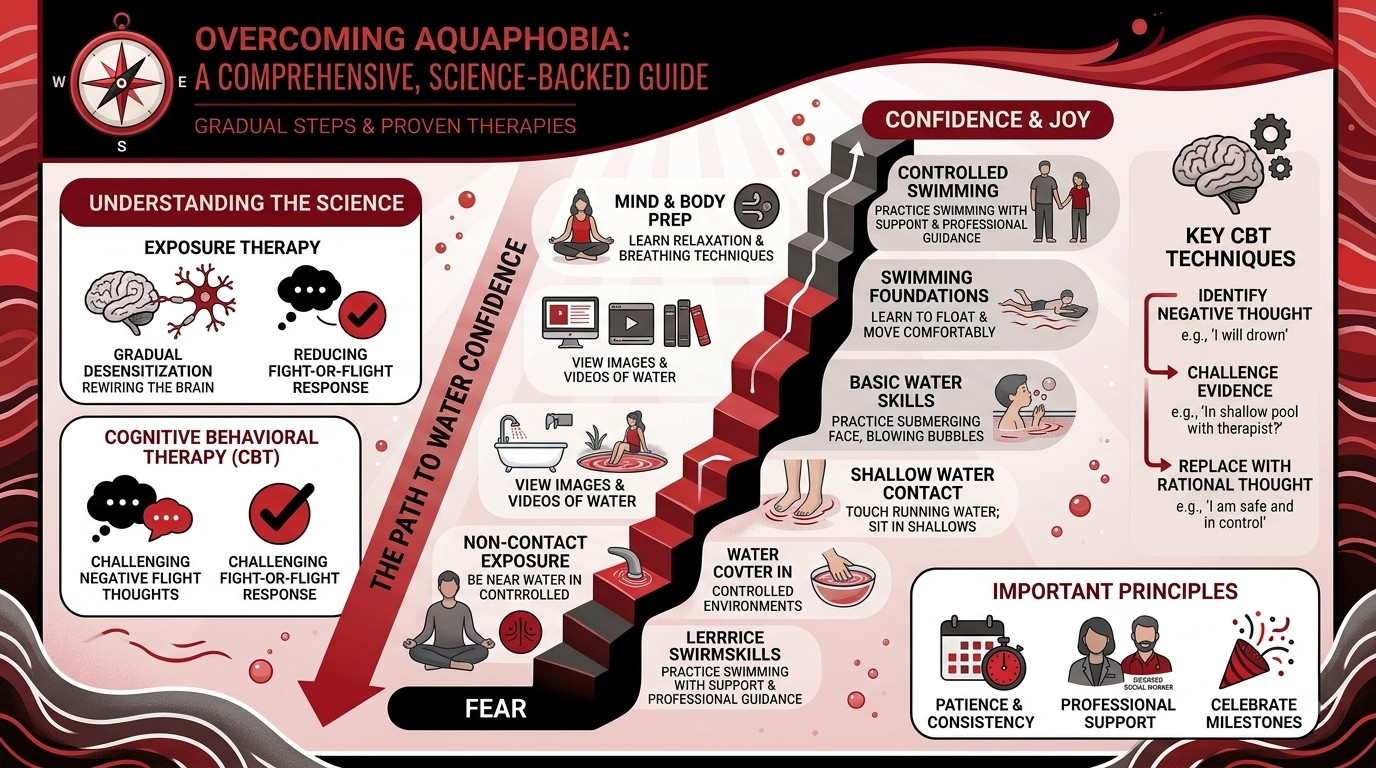
Evidence-based strategies for adults, children, and seniors — with insights from Cleveland Clinic, Harvard Health, and leading mental health experts
Introduction: You Are Not Alone
If the thought of putting your face in the water makes your heart race, or if you feel a knot in your stomach just looking at a swimming pool, you are far from alone. Aquaphobia — the persistent, irrational fear of water — affects between 2% and 3% of Americans, with some studies suggesting even higher prevalence. A Gallup poll found that 46% of American adults fear deep water in pools, and 39% fear putting their heads underwater.
The good news? Fear of water is highly treatable. Research shows that with the right approach, up to 90% of people with specific phobias see significant improvement. Whether you are an adult who never learned to swim, a parent of a fearful child, or a senior looking to stay active, this guide — drawing on权威 sources including Cleveland Clinic, Harvard Health, and Mayo Clinic — will help you understand and overcome your fear.
What Is Aquaphobia? (Medical Definition)
Aquaphobia is a specific phobia disorder — a type of anxiety disorder characterized by an extreme, persistent fear of a particular object or situation that poses little or no actual danger. The word comes from the Latin aqua (water) and Greek phobos (fear).
Key distinction: Aquaphobia is not the same as hydrophobia. Hydrophobia is a fear of water related to late-stage rabies infection, where people experience muscle spasms when they see, hear, or taste water. Aquaphobia, by contrast, is a psychological condition not linked to any physical illness.
What Do People with Aquaphobia Fear?
According to the Cleveland Clinic, someone with aquaphobia may be afraid of:
-
Baths or showers
-
Being sprayed or splashed by water
-
Drinking water
-
Lakes, oceans, rivers, and other bodies of water
-
Water from the tap
-
Swimming pools
In severe cases, people may avoid bathing, showering, or even using water from the sink to wash their face or brush their teeth.
Related Phobias
Aquaphobia is often linked to other specific phobias, including:
-
Ablutophobia — fear of bathing
-
Cymophobia — fear of waves
-
Thalassophobia — fear of large bodies of water
-
Megalohydrothalassophobia — fear of underwater creatures or objects
Causes: Why Does Fear of Water Develop?
Understanding the root cause of your fear is the first step to overcoming it. According to the Cleveland Clinic, possible causes include:
1. Past Traumatic Events
People who have had a traumatic experience related to water — such as a near-drowning incident, being pushed into water unexpectedly, or witnessing someone else struggle — are at higher risk of developing aquaphobia.
2. Negative Stories and Media Exposure
Scary stories about water, drowning, or shipwrecks heard during childhood can plant seeds of fear. Movies depicting frightening incidents in the water (like the 1975 film Jaws) can also contribute.
3. Family History and Genetics
Your risk of aquaphobia increases if a parent or close relative has a phobic disorder or anxiety disorder. Some people may also have a genetic mutation that makes them more prone to anxiety.
4. Modeling (Learned Behavior)
Seeing a person with aquaphobia or hearing someone talk about their fear of water may lead you to develop the same phobia.
5. Risk Factors
You may be more likely to develop aquaphobia if you already have:
-
Another phobia
-
An anxiety disorder
-
Panic disorder
-
Substance use disorder
Symptoms: How to Recognize Aquaphobia
Aquaphobia symptoms can range from mild to severe. The Cleveland Clinic lists the most common symptoms as:
| Physical Symptoms | Emotional & Behavioral Symptoms |
|---|---|
| Dizziness or fainting | Extreme anxiety when thinking about or seeing water |
| Intense sweating (hyperhidrosis) | Strong feeling of terror |
| Nausea | Avoidance of places near water (pools, lakes, beaches) |
| Pale skin | Panic attacks |
| Rapid breathing and heart rate | Trouble sleeping (insomnia) |
| Trembling, shaking, or tense muscles | Fear that is disproportionate to actual danger |
When is it a disorder? According to the Cleveland Clinic, you may have a specific phobic disorder if the fear of water:
-
Causes extreme anxiety
-
Goes on for at least six months
-
Leads you to avoid situations where water is present
-
Is significantly disruptive to your daily life
-
Triggers symptoms of anxiety or fear that don't match the actual danger
Treatment: Evidence-Based Approaches That Work
The good news is that aquaphobia is highly treatable. The Cleveland Clinic notes that as many as 9 in 10 people with specific phobias see their symptoms improve with proper treatment.
1. Exposure Therapy (The Gold Standard)
Exposure therapy is the most effective treatment for specific phobias. During this therapy, a mental health professional gradually exposes you to water-related stimuli while teaching you to manage your response.
The typical progression includes:
-
Learn relaxation techniques — breathing exercises to use before and during exposure
-
View images or videos of water
-
Progress to seeing water in a bathtub, glass, or sink
-
Touch running water
-
Look at or walk near a body of water or swimming pool
-
Finally, get into the water itself
"As many as 9 in 10 people with specific phobias see their symptoms improve after getting this type of psychotherapy." — Cleveland Clinic
2. Cognitive Behavioral Therapy (CBT)
CBT helps you learn to change how you perceive and respond to situations and objects that trigger symptoms. Many healthcare providers use CBT alongside exposure therapy.
3. Dialectical Behavior Therapy (DBT)
This modified form of CBT teaches people how to live in the moment, cope with distress, maintain relationships, and regulate emotions. It can be done in group settings or one-on-one.
4. Medications
Anti-anxiety drugs and antidepressants may help reduce aquaphobia symptoms. Healthcare providers often prescribe these medications alongside CBT.
5. Mindfulness and Relaxation Techniques
The Cleveland Clinic experts recommend meditation, yoga, and mindfulness training to reduce stress and help you relax before entering the water. Focusing on breathing, rather than fear, can keep you calm and increase your enjoyment.
Step-by-Step Guide: How to Overcome Fear of Water
Drawing from Harvard Health, Cleveland Clinic, and expert swim instructors, here is a practical, phased approach:
Phase 1: Start Outside the Water
Before you even step into a pool, build confidence on dry land:
-
Visualization: Close your eyes and imagine yourself calmly entering the water, floating, and breathing. Visualize success.
-
Breath Control Practice: Sit in a chair and practice taking deep breaths in through your nose and exhaling slowly through your mouth.
-
Face Splashing: Fill a large bowl with lukewarm water. Practice dipping your face in, holding your breath for 2 seconds, and lifting it out. Repeat until it feels comfortable.
Phase 2: Ease Into the Water
Harvard Health emphasizes: "Realize that overcoming any trepidation that you have about water or pools could take time. Go as slowly as you need to."
-
Start by sitting on the side of the pool with your feet in the water
-
Find a "zero entry" pool where the bottom slopes gently, so you can gradually walk in
-
Celebrate every small success and set a new goal for the next time
"If that's as far as you get one day, celebrate your success and set a new goal for the next time." — Harvard Health
Phase 3: Explore Your Fear
Harvard Health recommends: "Try to think about what exactly you might be nervous about. If you can identify the fear, then you can look for solutions."
-
If being in the middle of the pool with nothing to hold on to makes your heart race, start by holding onto a flotation device
-
If you fear being in over your head, start with shallow water exercises where both feet remain planted on the bottom
-
Then progress to moves where one foot is off the bottom, and finally exercises where you hop off the bottom
Phase 4: Learn to Float
Floating is one of the most important skills for overcoming fear of water. Harvard Health explains:
-
Lie on your back in the water and lean your head back, looking straight up at the sky or ceiling
-
Extend your arms out to your sides and spread your legs
-
Breathe deeply so plenty of air remains in your lungs — this helps keep you buoyant
-
Your upper body will remain at the surface, though your lower limbs will likely drift down (because muscles are denser)
Phase 5: Build Skills Gradually
Swim instructors recommend a slow, steady progression:
-
Start in shallow water where you can stand
-
Practice exhaling underwater until it feels natural
-
Learn to stand up from a float
-
Build skills in small weekly steps
"If you can identify the fear, then you can look for solutions." — Harvard Health
For Parents: Helping Children Overcome Fear of Water
Children are often more susceptible to aquaphobia. According to the Cleveland Clinic, aquaphobia affects children more than adults. Here are evidence-based strategies:
1. Start Small at Home
A simple bathtub or kiddie pool offers a safe, familiar space to introduce your child to water. Focus on play — dipping fingers, toes, or using floating toys — rather than teaching strokes immediately.
2. Stay Calm and Confident
Children are highly sensitive to their parents' emotions. Staying calm, positive, and patient communicates safety and reassurance. Your tone of voice, body language, and gentle encouragement matter more than strict instructions.
3. Keep Things Playful
Play is the fastest way to turn water from scary to safe. Use interactive games like bubbles, floating toys, and simple water races. These activities redirect attention from fear to curiosity.
4. Reward Small Steps
Celebrate every milestone — dipping toes in the water, placing hands on the surface, or successfully blowing bubbles. Claps, smiles, and verbal praise support progress and build trust.
5. Build Skills Gradually
Swimming success is built with simple steps. Start with legs in the water, followed by hands, face, and eventually short, shallow submersion. Gentle progression builds lasting water confidence.
6. Involve a Caring Instructor
The right instructor can make all the difference. A caring teacher who specializes in children's swimming understands that patience, empathy, and encouragement are just as important as teaching technique.
7. Be Consistent But Flexible
Short, regular exposures are often more effective than long, occasional sessions. Even a few minutes in the bathtub or pool can slowly reduce anxiety. However, pushing too hard on a "bad day" may increase resistance — always respect your child's pace.
For Seniors: Swimming as a Safe, Low-Impact Activity
For older adults, overcoming fear of water opens the door to one of the safest and most effective forms of exercise. Water buoyancy supports up to 90% of body weight, eliminating the joint impact that makes running or gym workouts painful.
Tips for seniors:
-
Start in the shallow end where you can stand comfortably
-
Use flotation devices for extra security
-
Consider adult swim classes — many pools offer programs specifically for seniors
-
Swim with a buddy — it's safer and more enjoyable
Essential Gear for Building Confidence
The right equipment can significantly reduce anxiety and accelerate progress:
Swim Caps
-
Swim Caps Collection – Soft silicone caps that protect hair and reduce drag
-
Men's Swim Caps – Durable, stretchable caps for a secure fit
-
Women's Swim Caps – Designed for longer hair with extra depth
-
Kids Swim Caps – Soft, fun-colored caps children actually want to wear
Swim Goggles
-
Men's Swim Goggles – Anti-fog, UV-protected lenses for clear vision
-
Kids Swim Goggles – Leak-proof, adjustable goggles that build confidence
Training Aids
-
Swim Accessories – Kickboards, pull buoys, flotation devices, and mesh bags
Frequently Asked Questions
Q: How common is aquaphobia?
A: Between 2% and 3% of Americans have aquaphobia, with some studies suggesting higher rates. It affects children more than adults.
Q: What is the difference between aquaphobia and hydrophobia?
A: Hydrophobia is a fear of water related to a late-stage rabies infection. Aquaphobia is an extreme fear of water not related to any physical condition or illness.
Q: How effective is treatment for aquaphobia?
A: Very effective. As many as 9 in 10 people with specific phobias see their symptoms improve with exposure therapy and cognitive behavioral therapy.
Q: Can I learn to swim as an adult?
A: Absolutely. Millions of adults learn to swim every year. It's never too late.
Q: How long does it take to overcome fear of water?
A: It varies. Some people feel comfortable in 2-3 sessions; others take several months. The key is consistency and patience.
Q: Is swimming safe for seniors with arthritis?
A: Yes. Water buoyancy supports up to 90% of body weight, making swimming one of the safest exercises for seniors with joint pain.
Final Thoughts: Your Journey to Water Confidence Starts Today
Fear of water is a common, treatable condition. With patience, gradual exposure, and the right support, you can transform fear into confidence. Whether you are an adult wanting to learn a new skill, a parent helping a child, or a senior looking for a low-impact workout, the water is waiting for you.
Ready to take the first step?
-
Start with our Swim Caps Collection for comfortable, protective headwear
-
Explore our Men's Swim Caps , Women's Swim Caps , and Kids Swim Caps for the whole family
-
Check out our Swim Accessories for kickboards, goggles, and flotation devices that build confidence
The pool is waiting. Take that first step today — and discover a whole new world of health, fun, and freedom!