

Dumbbells are the backbone of any serious strength training routine. Whether you're a beginner setting up your first home gym or an experienced lifter looking to upgrade your equipment, choosing the right dumbbells can make or break your fitness journey. In this comprehensive guide, we'll cover everything you need to know—from types and benefits to weight selection and buying tips—so you can make an informed decision and get the most out of every workout.
What Are Dumbbells and Why Are They Essential?
Dumbbells are compact, hand-held weights used for resistance training. They consist of a short bar with equal weight on both ends and are available in a wide range of sizes—from as light as 2 pounds to over 100 pounds. But their simplicity belies their effectiveness.
The Centers for Disease Control and Prevention (CDC) recommends that adults get at least two days of strength training per week. Dumbbells are one of the most accessible and versatile tools to meet this requirement. They allow you to work against gravity, building stronger muscles while also getting your heart rate up to burn fat.
Key Benefits of Dumbbell Training
Improved Circulation – When you challenge your muscles with dumbbells, your blood pumps stronger, boosting oxygen and nutrient flow throughout your body.
Lower Health Risks – Regular dumbbell training lowers your risk of heart attack, stroke, and cardiovascular disease. Building lean muscle mass helps you burn fat more efficiently.
Better Sleep – Studies show that strength training with dumbbells leads to improved sleep quality, which in turn enhances workout performance.
Weight Loss – While cardio is beneficial, strength training is key for sustainable weight loss. Building lean muscle mass increases your resting metabolic rate, helping you burn more calories even when you're not working out.
Joint-Friendly Movement – Unlike barbells that lock you into a fixed path, dumbbells move with your body's natural range of motion, making them easier on your joints.
Types of Dumbbells: Which One Is Right for You?
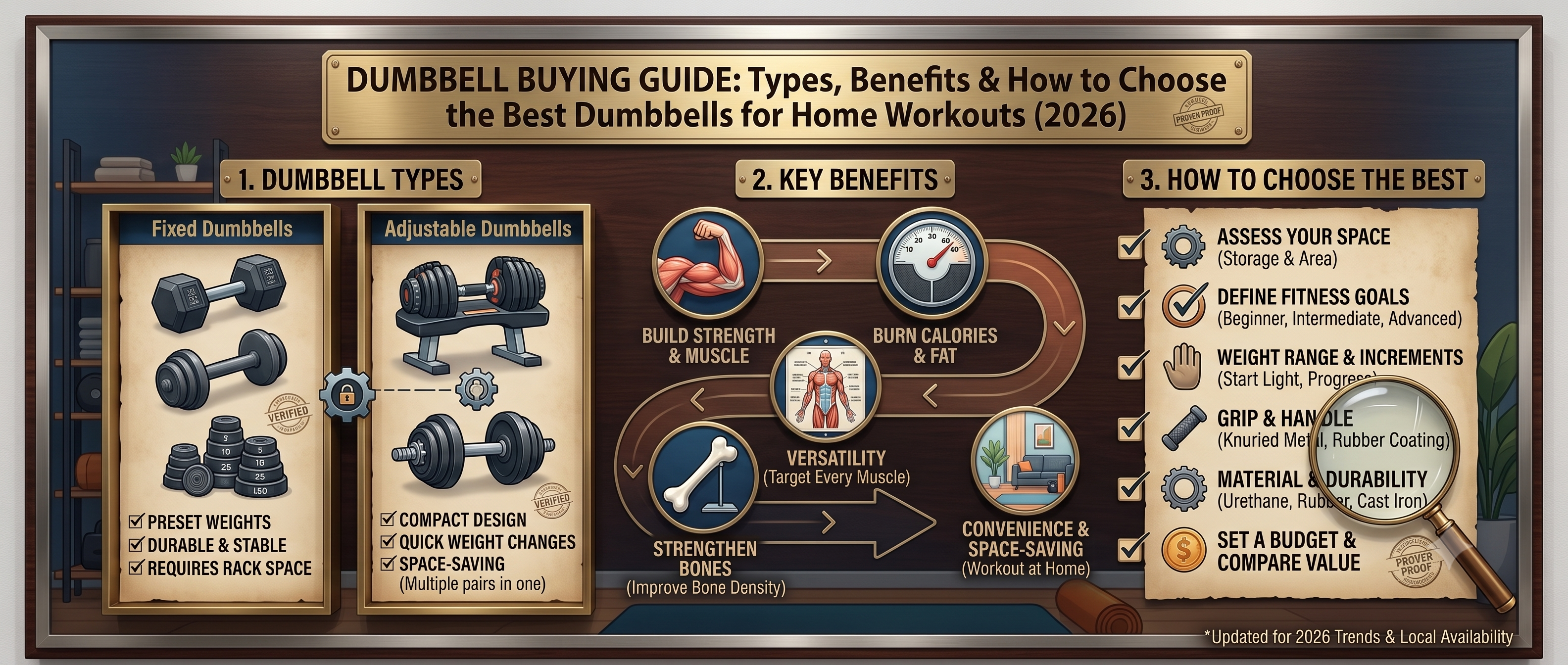
Choosing the right type of dumbbell depends on your fitness goals, available space, and budget. Here's a breakdown of the most common types:
1. Fixed Dumbbells
Fixed dumbbells have a set weight that cannot be changed. They're straightforward to use—just pick them up and go.
Pros:
-
Quick and easy to grab during workouts
-
Durable and long-lasting
-
No mechanical parts to break
Cons:
-
Require more space if you want a full range of weights
-
Higher upfront cost for a complete set
Best For: Commercial gyms, dedicated home gyms with ample space, and lifters who prefer simplicity. Browse our collection of fixed dumbbells for durable options.
2. Adjustable Dumbbells
Adjustable dumbbells allow you to change the weight using a dial or plate system. They offer the versatility of an entire rack of weights in a single, compact pair.
Pros:
-
Save significant floor space
-
Cost-effective compared to buying multiple fixed pairs
-
Grow with you as you get stronger
Cons:
-
Can be slower to change weights between exercises
-
Higher upfront cost than a single pair of fixed dumbbells
-
Some models have mechanical parts that may wear over time
Best For: Home gyms with limited space, beginners who want room to progress, and versatile training programs. Check out our adjustable dumbbell set collection for space-saving solutions.
3. Hex Dumbbells
Hex dumbbells feature a hexagonal shape that prevents them from rolling away—a significant safety advantage, especially for home workouts.
Pros:
-
Non-roll design for safety
-
Durable and stable
-
Available in rubber-coated options that protect floors
Cons:
-
Fixed weight only
-
Can be bulky
Best For: Home gyms, functional fitness, and anyone concerned about dumbbells rolling underfoot.
4. Neoprene Dumbbells
Neoprene dumbbells have a soft, colorful coating that provides a comfortable, non-slip grip.
Pros:
-
Comfortable to hold
-
Quiet and gentle on floors
-
Aesthetically pleasing and available in various colors
Cons:
-
Typically available only in lighter weights
-
Coating can wear over time with heavy use
Best For: Beginners, light toning work, and home gyms where aesthetics matter.
5. Urethane Dumbbells
Urethane-coated dumbbells are the premium choice for serious lifters. They offer exceptional durability, odor resistance, and floor protection. Explore heavy-duty options like our adjustable dumbbells 20kg 30kg 40kg 50kg range.
Pros:
-
Extremely durable
-
Resistant to chipping and cracking
-
Low odor compared to rubber
Cons:
-
Higher cost
-
Heavier than rubber alternatives
Best For: Commercial gyms, serious home gyms, and lifters who want the best.
How to Choose the Right Dumbbell Weight
Selecting the right weight is crucial for both safety and results. Here's a general guide:
| Weight Range | Best For |
|---|---|
| 2.5 kg | Beginners and muscle toning |
| 5 kg | Beginner strength training |
| 7.5 kg | Progressive overload and intermediate training |
| 10 kg | Advanced strength workouts |
| 12.5 kg & above | Heavy lifting and muscle building |
The "Last Two Reps" Rule
The ideal weight should make your muscles feel tired by the time you reach 12-15 repetitions. If you can easily complete more than 15 reps, the weight is too light. If you can't maintain proper form for at least 8 reps, it's too heavy. The goal is to barely be able to finish the last repetition with good form.
Progressive Overload: The Key to Continuous Gains
Progressive overload—gradually increasing the weight, reps, or frequency of your workouts—is essential for building strength and muscle. Adjustable dumbbells are particularly valuable here because they allow you to increase resistance in small increments as you get stronger.
Fixed vs. Adjustable Dumbbells: Which Is Better for Home Workouts?
This is one of the most common questions for anyone setting up a home gym. The answer depends on your priorities. For an in-depth comparison, read our detailed guide on Adjustable Dumbbells vs Fixed Dumbbells: Which is Better for Home Workouts.
Choose Fixed Dumbbells If:
-
You have ample space for a rack
-
You prefer quick transitions between exercises
-
You want maximum durability with no moving parts
-
You're setting up a commercial or shared gym
Choose Adjustable Dumbbells If:
-
Space is limited
-
You want a cost-effective solution that covers multiple weight ranges
-
You're a beginner who wants room to progress
-
You value versatility over speed of weight changes
For most home gym users, adjustable dumbbells offer the best balance of functionality, space efficiency, and value. Learn more about how to choose the right adjustable dumbbells for your home gym.
Common Dumbbell Mistakes to Avoid
1. Holding Your Breath
Working out with dumbbells is strenuous, and many people unconsciously hold their breath during heavy lifts. This can increase blood pressure and raise your risk of hernia. Remember to breathe—exhale during the exertion phase and inhale during the return.
2. Skipping the Warm-Up
Cold muscles are more prone to injury. Take at least 10 minutes to warm up with light aerobic activity before picking up dumbbells.
3. Using Poor Form
Poor form not only reduces effectiveness but also increases injury risk. If you're new to dumbbell training, check out our guide on the best adjustable dumbbells for beginners to start safely.
4. Overtraining
Rest is just as important as working out. Give each muscle group at least one full day of rest between workouts. Listen to your body—if you're feeling sore, take a break.
5. Choosing the Wrong Weight
Using weights that are too heavy compromises form and increases injury risk. Weights that are too light won't provide enough stimulus for growth. Find the sweet spot where you can complete 8-15 reps with good form but struggle on the last few.
Best Exercises with Dumbbells
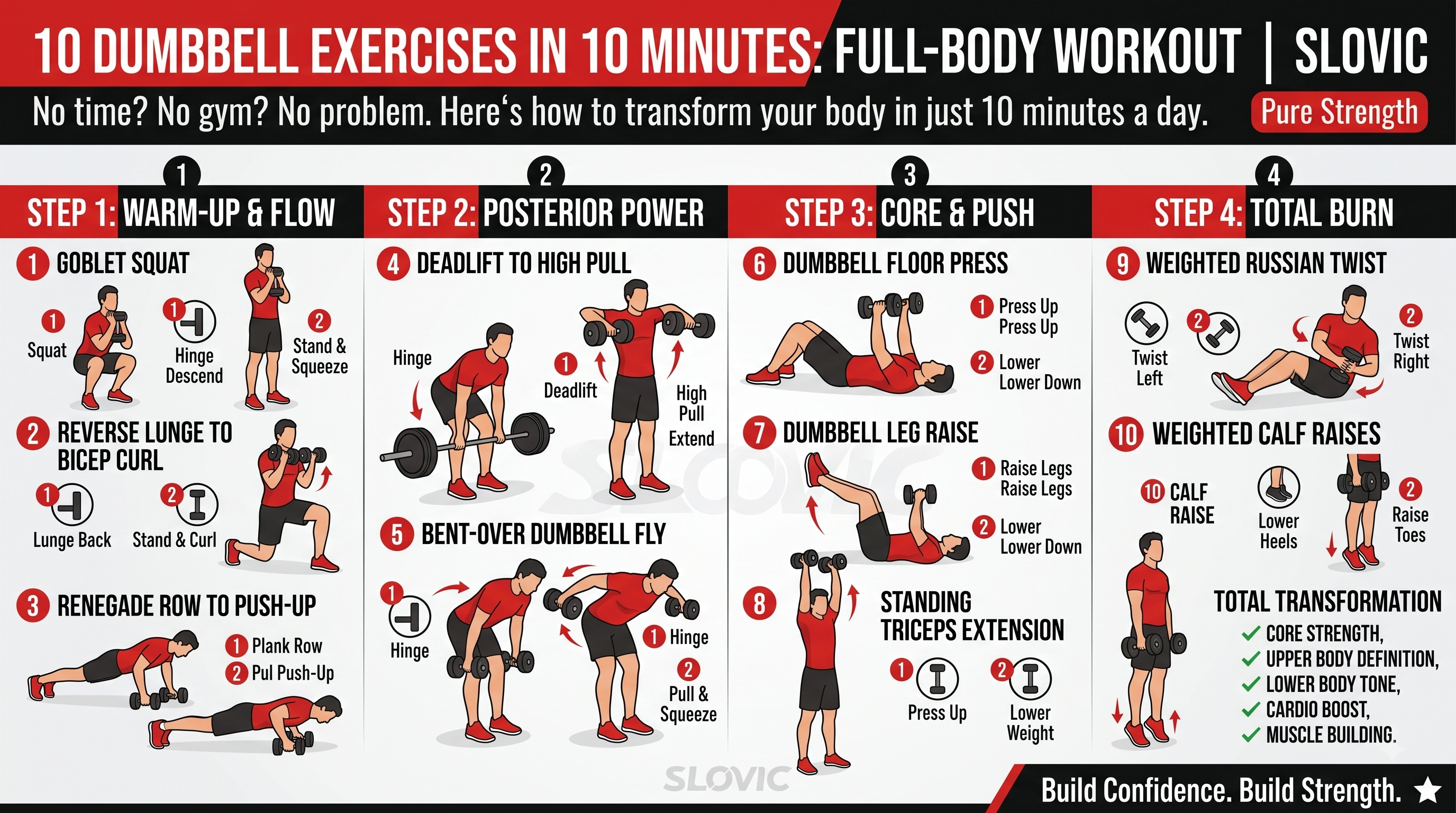
A pair of dumbbells can target every major muscle group. Here are some of the most effective exercises:
Upper Body:
-
Bicep Curls
-
Hammer Curls
-
Shoulder Press
-
Arnold Press
-
Bent-Over Rows
-
Chest Press
-
Chest Fly
-
Triceps Extensions
Lower Body:
-
Goblet Squats
-
Bulgarian Split Squats
-
Walking Lunges
-
Romanian Deadlifts
Full Body & Core:
-
Farmer's Walk
-
Renegade Rows
-
Russian Twists
Dumbbell Maintenance and Care
To ensure your dumbbells last for years:
-
Clean regularly – Wipe down rubber or neoprene coatings after each use to prevent odor and degradation.
-
Store properly – Use a rack or designated storage area to prevent damage and tripping hazards.
-
Check adjustable mechanisms – For adjustable dumbbells, periodically check that locking mechanisms are secure.
-
Avoid dropping – Even durable dumbbells can be damaged by repeated drops. Lower them controlled.
Frequently Asked Questions
Can I build muscle with just dumbbells?
Absolutely. Dumbbells are one of the most effective tools for building muscle, whether you're training at home or in a gym.
Are dumbbells good for beginners?
Yes. They're safe, versatile, and effective—perfect for anyone new to strength training. For a complete roadmap, read the Best Adjustable Dumbbells in India 2026: Complete Buying Guide for Home Workouts.
What weight dumbbells should I start with?
Beginners typically start with 2.5 kg dumbbells to 5 kg dumbbells for upper body exercises and slightly heavier for lower body movements.
Can dumbbells help with weight loss?
Yes. Strength training with dumbbells builds lean muscle mass, which increases your metabolism and helps you burn more calories throughout the day.
Conclusion: Invest in Your Strength
Dumbbells are one of the smartest investments you can make in your fitness journey. They're versatile, effective, and suitable for every fitness level—from beginners taking their first steps into strength training to advanced lifters pushing their limits.
When choosing your dumbbells, prioritize quality, comfort, and the right weight range for your goals. Whether you opt for hex dumbbells for their stability, neoprene dumbbells for comfort, or adjustable dumbbells for versatility, the perfect set is out there waiting for you.
Ready to start your strength training journey? Explore Slovic's complete range of dumbbells and find the perfect pair for your home gym. We offer options for every budget—including dumbbells under ₹1,000 and dumbbells under ₹2,000—along with premium adjustable dumbbell sets for serious lifters.
Remember: The best dumbbell is the one you'll actually use. Start light, focus on form, and progress gradually. Your future self will thank you.