

TPE or PVC?
It sounds technical. It sounds like something you should already know. But the truth is, most people buy their first yoga mat without ever thinking about the material — and then spend months wondering why their mat smells strange, or why it slips when they sweat, or why their knees hurt after every session.
The material of your yoga mat affects everything: how it feels, how long it lasts, how easy it is to clean, how it grips, and what happens to it when you finally throw it away.
This guide will explain what TPE yoga mats are, what PVC yoga mats are, and — most importantly — which one is better for you. We will look at this specifically from an Indian perspective, because practising on a marble floor in Mumbai is a very different experience from practising on a wooden studio floor in Vancouver.
Let's settle this properly.
What Is a TPE Yoga Mat?
TPE stands for Thermoplastic Elastomer.
It is a material that sits somewhere between rubber and plastic. It has the elastic, flexible quality of rubber and the mouldability of plastic. In yoga mats, TPE is used to create a surface that is lightweight, cushioning, and — crucially — free from the chemical smell that plagues traditional mats.
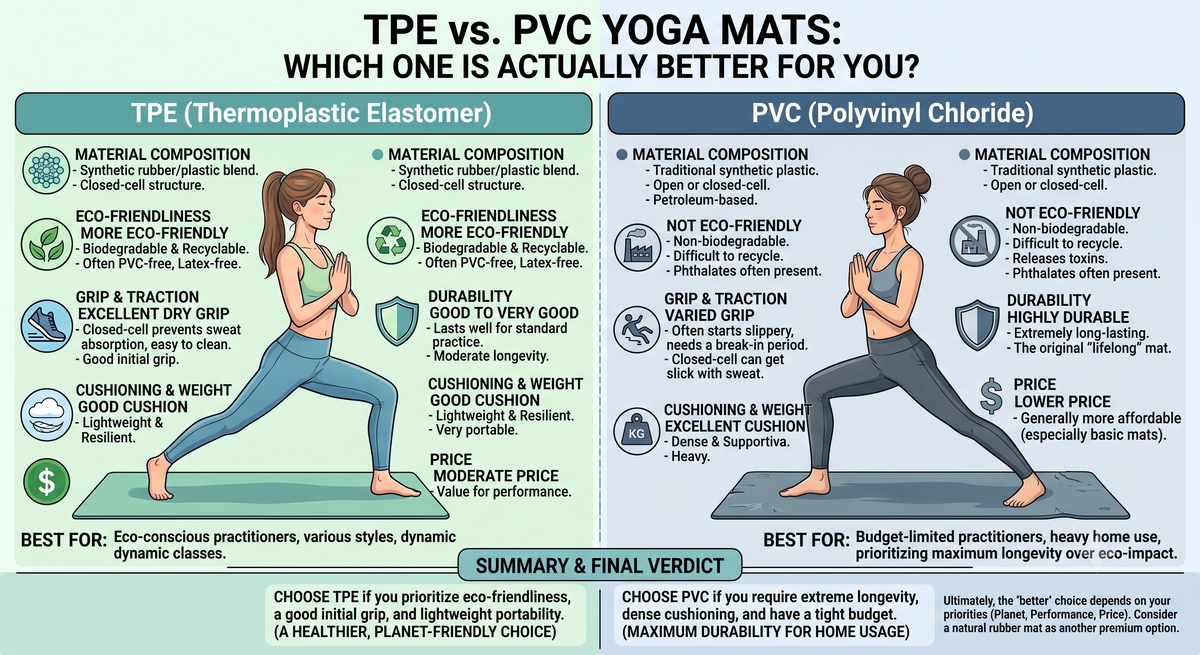
TPE is considered the more modern, more eco-friendly alternative to PVC. It can be manufactured without phthalates, heavy metals, and the toxic plasticisers used in PVC production. It is also recyclable.
Key Features of TPE Yoga Mats
-
Odourless: No chemical smell when new
-
Lightweight: Often 30–40% lighter than PVC
-
Closed-cell structure: Does not absorb sweat, stays hygienic
-
Good cushioning: Softer and more forgiving on joints
-
Recyclable: Better environmental profile than PVC
-
Non-slip surface: Good grip for dry and lightly sweaty practice
Advantages of TPE Yoga Mats
1. No chemical smell. This is the first thing most people notice. A TPE mat does not need to be aired out for a week before use. It smells like nothing. For anyone sensitive to chemical odours, this alone makes TPE worth it.
2. Better cushioning. TPE is naturally softer than PVC. A 6mm TPE mat feels noticeably more comfortable on knees and wrists than a 6mm PVC mat — which matters enormously when you practise on hard Indian floors.
3. Hygienic and easy to clean. TPE has a closed-cell structure. Sweat does not seep into the mat. A quick wipe with a damp cloth is usually all it needs. No lingering odour, no bacterial buildup.
4. Lightweight and portable. Carrying a PVC mat to class can feel like carrying a rolled-up carpet. A TPE mat is significantly lighter, which makes a real difference if you commute or travel.
5. More eco-friendly. TPE is recyclable and free from the toxic chemicals used in PVC production. It is not perfectly sustainable — it is still a synthetic material — but it is a meaningfully better choice.
Disadvantages of TPE Yoga Mats
1. Slightly higher price. Quality TPE mats cost more than entry-level PVC mats. However, in India, you can find excellent TPE yoga mats under ₹1000 — so this gap has narrowed considerably.
2. Less durable than PVC. TPE is softer, so it can compress and wear faster under heavy daily use. A TPE mat used daily might last two to three years, where a PVC mat might last five.
3. Texture may not suit everyone. Some practitioners find the slightly bumpy texture of TPE mats less pleasant than the smoother surface of PVC. This is purely personal preference.
What Is a PVC Yoga Mat?
PVC stands for Polyvinyl Chloride.
It is a synthetic plastic that has been the standard yoga mat material for decades. If you have ever used a studio mat — the kind that gets wiped down between classes — it was almost certainly PVC.
PVC mats are cheap to produce, extremely durable, and offer excellent grip when dry. This is why they have dominated the market for so long.
However, PVC has a significant downside: its environmental impact and the presence of toxic chemicals in its production.
Key Features of PVC Yoga Mats
-
Highly durable: Can last five years or more with regular use
-
Excellent dry grip: Tacky surface holds hands and feet well
-
Firm cushioning: Denser and more stable than TPE
-
Affordable: Cheaper entry point than TPE
-
Wide availability: Most common mat material globally
Advantages of PVC Yoga Mats
1. Exceptional durability. PVC mats are built to last. A good PVC mat can survive years of daily practice without losing its structure. This is why premium brands still use PVC for their flagship mats — the Manduka PRO, for example, is famously backed by a lifetime warranty.
2. Excellent dry grip. PVC has a naturally tacky surface that provides outstanding grip when dry. For practitioners who do not sweat heavily, this is the best grip available.
3. Firm and stable. PVC mats feel firmer underfoot, which many experienced yogis prefer for balance poses. There is less sink and more feedback from the floor.
4. Affordability. Entry-level PVC mats are cheap. For studios buying mats in bulk, or beginners who just want something to start with, PVC is the economical choice.
Disadvantages of PVC Yoga Mats
1. Strong chemical smell. This is PVC's most notorious flaw. New PVC mats release volatile organic compounds (VOCs) — that "new plastic" smell. It usually fades within a week or two, but for some people it lingers much longer.
2. Environmental concerns. PVC is one of the least recyclable plastics. It is not biodegradable. Its production involves toxic chemicals and releases harmful pollutants. Discarded PVC mats remain in landfills for decades.
3. Health concerns. Many PVC mats contain phthalates, which are used as plasticisers. These have raised health concerns, particularly for people with sensitivities or latex allergies.
4. Absorbs sweat. Most PVC mats have an open-cell structure, which means they absorb sweat over time. This can lead to odour and bacterial buildup if not cleaned regularly.
5. Heavy. PVC mats are significantly heavier than TPE mats, making them a chore to carry.
TPE vs PVC: Head-to-Head Comparison
Here is the honest, side-by-side breakdown.
| Feature | TPE Yoga Mat | PVC Yoga Mat |
|---|---|---|
| Smell when new | Essentially odourless | Strong chemical odour |
| Dry grip | Good | Excellent |
| Wet grip | Moderate to good | Poor |
| Cushioning | Softer, more cushioned | Firmer, more stable |
| Weight | Lightweight | Heavy |
| Durability | 2–3 years (daily use) | 5+ years (daily use) |
| Hygiene | Closed-cell, does not absorb sweat | Open-cell, absorbs sweat |
| Eco-friendliness | Recyclable, PVC-free | Non-recyclable, toxic production |
| Price | Mid-range | Budget to premium |
| Best for | Home practice, comfort, eco-consciousness | Longevity, dry grip, stability |
Which One Is Better? The Honest Answer
There is no single "better" material. There is only the material that fits your practice, your floor, and your priorities.
But let me give you a clear decision framework.
Choose TPE If:
-
You practise at home on marble, tile, or granite floors — the cushioning matters
-
You want a mat that does not smell of chemicals
-
You have sensitive knees or wrists
-
You care about eco-friendliness and want a PVC-free yoga mat
-
You want something lightweight and easy to carry
-
You want a mat that stays hygienic with minimal cleaning
-
You are a beginner or intermediate practitioner
This covers the vast majority of people reading this.
Choose PVC If:
-
You are an advanced practitioner who wants maximum durability
-
You prefer a firm, stable surface for balance work
-
You practise mostly dry and want the tackiest possible grip
-
You are willing to invest in a premium mat that lasts many years
-
You do not mind the initial smell and the heavier weight
-
You are buying for a studio where mats get heavy use
The India-Specific Verdict
Here is something most global guides miss: in India, most people practise at home on hard floors.
Marble, granite, and tile have almost zero give. On these surfaces, a thin PVC mat compresses under your body weight until you are essentially kneeling on stone. A 6mm TPE mat, with its superior cushioning, makes a dramatic difference.
Add in the fact that TPE mats do not smell, are easier to clean, and are more eco-friendly — and for most Indian practitioners, TPE is the smarter choice.
PVC still has its place. If you are a serious practitioner who wants a mat that will outlast everything else in your kit, a high-quality PVC mat is a worthy investment. But for the average home yogi, TPE wins.
A Note on "Eco-Friendly" Claims
You will see many mats marketed as eco-friendly yoga mats. Be a little sceptical.
TPE is more eco-friendly than PVC — it is recyclable, PVC-free, and manufactured without the worst toxic chemicals. But it is still a synthetic plastic. It is not perfectly sustainable.
If genuine sustainability is your priority, look at:
-
Natural rubber mats — made from rubber tree sap, biodegradable, excellent grip
-
Cork mats — harvested from tree bark, naturally antimicrobial, grip improves with sweat
-
Jute mats — natural fibre, biodegradable, though firmer
These are the truly eco-friendly options. They cost more and have trade-offs, but they are the honest answer.
TPE is the practical middle ground: meaningfully better than PVC, affordable, and genuinely pleasant to use.
What to Look For When Buying a TPE Yoga Mat
If you have decided TPE is right for you, here is a quick checklist before you buy yoga mats online:
1. Thickness. For Indian floors, 6mm is the sweet spot. It gives real cushioning without feeling unstable. If you need more, consider an 8mm thick yoga mat in EVA instead.
2. Textured base. You want a mat with a textured underside that grips hard floors. This is the difference between a mat that stays put and one that slides.
3. Closed-cell construction. Confirm it. This is what makes TPE hygienic and easy to clean.
4. No odour. A good TPE mat should have no noticeable smell. If reviews mention a strong chemical odour, look elsewhere.
5. Size. Standard mats are around 68 inches. If you are tall, look for a 72 inch yoga mat or an extra large yoga mat.
6. Carry strap or bag. A yoga mat with strap makes a real difference if you carry your mat anywhere.
7. Certifications. Look for OEKO-TEX or similar certifications, which indicate the mat has been tested for harmful substances.
Top TPE Yoga Mats from Slovic
If you have decided to go with TPE, Slovic has a genuinely solid range — and the prices make sense for Indian households.
My top pick for most people:
-
6 MM Foldable TPE Yoga Mat – Anti-Slip Exercise Mat – Eco-friendly TPE, 6mm thickness ideal for hard floors, foldable for easy storage, and odourless. This is the one I recommend to anyone buying their first proper mat.
For travel and lighter practice:
-
4 MM Foldable TPE Yoga Mat – Anti-Slip Exercise Mat – Lighter and more portable, with the same eco-friendly TPE construction. Great for carrying to class or packing in a bag.
-
4 MM-TPE Foldable Yoga Mat for Men & Women – Orange – Same great TPE material in a vibrant orange, another option in the 4mm range.
For a slightly different feel, try the 6mm TPE in purple:
-
Yoga Mats For Women (TPE 6mm) – A slightly thicker TPE option with a premium feel, ideal if you want the eco-friendliness of TPE with a bit more cushioning.
-
Yoga Mats For Women (Purple) – Another TPE variant described as "Ultra Thick | Sweat-Resistant | Long Lasting."
If you want a TPE-style experience with a bit more cushioning, consider EVA:
-
Yoga Mat for Men & Women [6 MM] – Green – EVA foam with excellent joint support.
-
Yoga Mat for Men & Women [6 MM] – Navy Blue – Same cushioning, classic colour.
-
Blue Thick Yoga Mat – 8mm – Maximum cushioning for sensitive joints, comes with a bag.
-
Yoga Mat – Marble Design – 8mm – Combines thick cushioning with a stylish marble design.
Budget picks:
-
EVA Yoga Mat (4MM) With Strap – Wine – Affordable and comes with a strap.
-
Yoga Mat for Women – 4MM (Blue) – Lightweight and easy to clean.
Browse the full range:
Complete Your Setup
Your mat is the foundation, but a complete home practice setup goes further.
Frequently Asked Questions: TPE vs PVC Yoga Mats
Is TPE better than PVC for yoga mats?
For most home practitioners in India, yes. TPE is odourless, lighter, more hygienic, more eco-friendly, and offers better cushioning. PVC has the edge in raw durability and dry grip, which matters more for advanced practitioners and studio use.
Are TPE yoga mats safe?
Yes. TPE is free from phthalates and heavy metals, and it does not off-gas the way PVC does. It is considered one of the safer synthetic mat materials available.
Do TPE yoga mats last long?
A well-made TPE mat used regularly will typically last two to three years. With good care — cleaning it regularly and storing it out of direct sunlight — you can extend that further. PVC mats generally last longer, but they come with the trade-offs discussed above.
Why does my new yoga mat smell?
If it smells strongly of chemicals, it is almost certainly PVC. That odour comes from volatile organic compounds released during manufacturing. TPE mats should have little to no smell. If the smell bothers you, air the mat out in a well-ventilated space for a few days.
Can I use a TPE yoga mat for hot yoga?
TPE handles light sweat well, but for intense hot yoga, a mat designed specifically for moisture — cork or a specialised grip mat — will serve you better.
How do I clean a TPE yoga mat?
Wipe it down with a damp cloth and a few drops of mild soap. Then wipe again with clean water and let it air dry completely before folding or rolling. Because TPE is closed-cell, it does not absorb sweat, so it stays fresh with minimal effort.
What is the best thickness for a TPE yoga mat?
6mm is the best all-round thickness for Indian homes, especially on hard floors. 4mm works well for travel and wooden floors. If you need more cushioning than 6mm TPE can provide, consider an 8mm EVA mat instead.
Are TPE yoga mats biodegradable?
TPE is recyclable, but it is not fully biodegradable. It is still a synthetic material. If biodegradability is your priority, look at natural rubber, cork, or jute mats.
Final Thoughts: Choose the Material That Matches Your Life
The TPE vs PVC debate does not have a single winner. It has a winner for you.
If you want a mat that is odourless, lightweight, hygienic, cushioning, and more eco-friendly — go with TPE.
If you want a mat that is firm, tacky, and will outlast everything else you own — go with PVC.
For most people reading this — practising at home, wanting comfort, wanting something that does not smell like a hardware store — TPE is the one I would hand you.
Your mat should support your practice, not fight it. Choose based on your floor, your body, and your values. And if you are still unsure, start with a 6mm TPE mat. It is the safest, most comfortable bet for Indian homes — and you can always upgrade later.
Related Reads
Which mat material do you use — TPE or PVC? Have you ever switched? Tell me in the comments, and I will help you figure out which one suits your practice best.